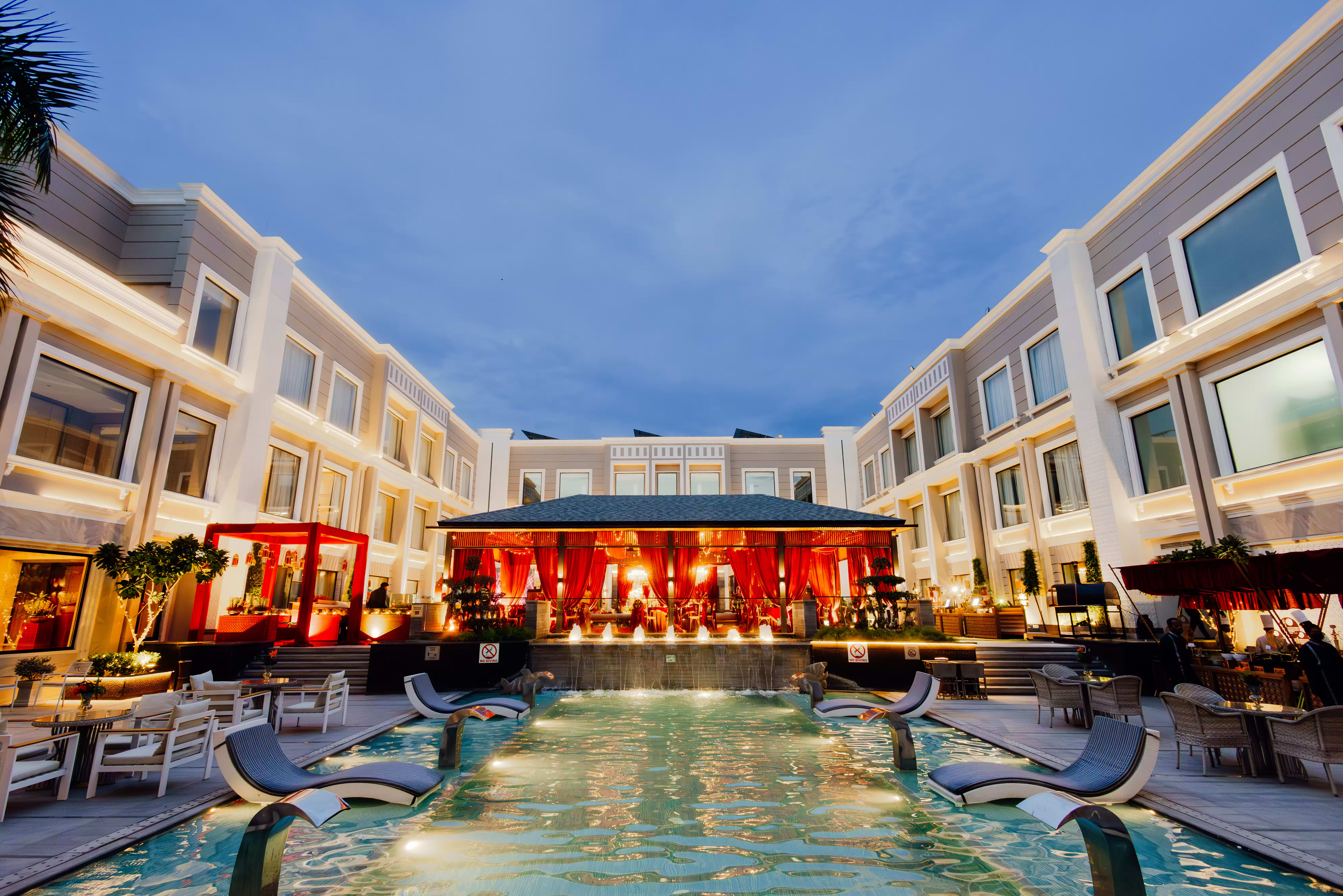
A palace wedding is not just a venue choice; it is a creative direction that shapes every visual decision from the first invitation to the final farewell. When you host your wedding at a heritage palace property, the architecture becomes your most powerful design element. Carved stone columns, grand archways, ornate jharokhas, sweeping courtyards, and heritage-wing corridors provide a built-in visual language that no amount of imported decor can replicate. The best palace wedding decor does not compete with the architecture. It amplifies it.
This guide explores three distinct decor themes for heritage palace weddings: the classic Rajasthani Royal theme, the refined Mughal Imperial theme, and the contemporary Indo-European Fusion theme. Each approach is detailed with specific design elements, floral choices, colour palettes, lighting strategies, and budget ranges. The ideas are tailored for Tivoli Heritage Palace in Rewari and Tivoli Royal Palace in Faridabad, the two Tivoli properties with the strongest heritage character, but the principles apply to any palace or heritage venue.
The key insight that separates good palace wedding decor from extraordinary palace wedding decor is restraint. The venue is already grand. Your decorator's job is to curate, enhance, and personalise, not to overwhelm. The palace tells a story through its architecture. Your decor adds a chapter to that story, woven with your family's colours, your cultural traditions, and your personal aesthetic.
Theme 1: Rajasthani Royal – The Classic Heritage Celebration
The Rajasthani Royal theme is the most natural fit for a palace wedding. It draws directly from the design vocabulary of Rajasthan's royal courts, incorporating rich textiles, traditional craftsmanship, vibrant colour, and ceremonial grandeur. This theme resonates deeply with families who want their wedding to feel like a page from a royal chronicle, where every element carries cultural meaning and visual weight.
Colour Palette
The Rajasthani Royal palette centres on deep, saturated colours that reflect the desert state's bold artistic traditions: maroon (the colour of the Rajput bridegroom's turban), burnt orange (evoking the sandstone forts), royal blue (the colour of Jodhpur), emerald green (representing prosperity), and gold (the thread that connects everything). Accents of hot pink and saffron yellow add vibrancy. This palette works exceptionally well against the stone and sandstone tones of heritage architecture, creating a visual richness that photographs brilliantly in both daylight and artificial lighting.
The Baraat Entrance
At Tivoli Heritage Palace, the baraat procession through the palace gate is a defining moment. Decor for this segment includes decorated heritage gates with marigold toran (garlands) and mango leaf strings, a pathway lined with brass oil lamps (diyas) on both sides, welcome elephants (decorative or, where available, real caparisoned horses), traditional naqqara (drum) players at the entrance, and rose petal cannons for the groom's arrival. The entrance decor sets the tone for the entire celebration and is one of the most photographed moments. Budget: Rs 75,000 to Rs 2,00,000.
The Mandap Design
The Rajasthani mandap is a four-pillar canopy structure that reflects temple and palace architecture. The pillars are typically carved wood or decorated columns wrapped in maroon and gold fabric with fresh flower garlands. The canopy features layered fabric draping in the primary palette colours with marigold and rose string arrangements cascading from the edges. The floor is covered with a rich red or maroon carpet with a raised platform for the couple. Behind the mandap, a floral backdrop of marigolds, roses, and jasmine in graduated colour creates depth. The phera area around the sacred fire is bordered by brass urlis with floating marigolds and candles. Budget: Rs 2,00,000 to Rs 6,00,000.
Courtyard and Lawn Setup
Heritage palace courtyards are the primary ceremony and dining spaces. The Rajasthani theme dresses these areas with durrie-covered floor seating for the mehendi and haldi functions, brass and copper tableware for the dining setup, hand-painted cloth backdrops (pichhwai art) hung on courtyard walls, traditional umbrella installations (chattri) providing shade and visual interest, potted marigold and jasmine plants lining walkways, and lanterns with coloured glass creating warm pools of light in the evening. Budget: Rs 3,00,000 to Rs 8,00,000 for a full courtyard transformation.
The Dining Experience
Rajasthani Royal dining decor complements the food with thematic table styling. Think brass thalis and katoris for the traditional meal service, banana-leaf and pattal (leaf plate) setups for a rustic royal touch, a chaat and street-food market-style counter in the courtyard corner, live Rajasthani folk musicians performing during dinner, and lantern centrepieces with marigold and rose arrangements on each table. The combination of royal presentation with rustic, authentic food styling creates a memorable dining experience that balances grandeur with warmth.
Total Budget for Rajasthani Royal Theme
For a 500-guest, two-day palace wedding at Tivoli Heritage Palace with full Rajasthani Royal decor: Rs 15,00,000 to Rs 35,00,000 covering entrance, mandap, courtyard setup, dining styling, floral installations, and lighting. This does not include venue and catering costs, which are separate.
Theme 2: Mughal Imperial – Refined Court Elegance
The Mughal Imperial theme draws from the refined aesthetics of the Mughal courts: symmetry, geometric patterns, lush gardens, water features, and a design philosophy where every element serves both functional and decorative purposes. This theme is more structured and formal than the Rajasthani approach, with an emphasis on precision, pattern, and architectural harmony.
Colour Palette
The Mughal palette is richer and more restrained than the Rajasthani scheme: ivory and cream as the base, deep emerald green and jade, dusty rose and old rose pink, burnished gold and antique brass, and midnight blue as an accent. The palette draws from Mughal miniature paintings and the marble-and-inlay work of monuments. Against palace stone, these colours create a refined, almost regal restraint that reads as effortlessly elegant in photographs.
The Charbagh Garden Layout
The Mughal charbagh (four-part garden) concept divides the outdoor space into symmetrical quadrants with a central water feature or pathway. At Tivoli Heritage Palace, the palace lawns can be divided into four zones, each with a distinct function: one for the ceremony, one for dining, one for entertainment, and one for a lounge or cocktail area. A central pathway or water channel (created with long, narrow reflecting pools) connects the zones and provides a processional route. This layout creates visual order and prevents the sprawling, undefined feel that large outdoor weddings can sometimes have.
The Mughal Mandap
The Mughal-inspired mandap is characterised by pointed arches (mehrab), geometric lattice patterns (jali), and symmetrical floral arrangements. The structure often features a domed canopy supported by slender columns with inlay-pattern wrapping. The colour scheme uses ivory draping with emerald and gold accents. Fresh flowers are arranged in precise, symmetrical patterns rather than the cascading, organic arrangements of the Rajasthani theme. White roses, tuberoses, and jasmine dominate, with green foliage providing structure. Budget: Rs 3,00,000 to Rs 8,00,000.
Lighting Strategy
Mughal-themed lighting emphasises warmth and symmetry. Rows of identical oil lamps or LED candles line pathways in perfect formation. Chandeliers or lanterns are spaced at equal intervals. Uplighting on palace architecture highlights columns and arches from below, creating dramatic shadows that emphasise the geometric patterns. The overall effect is one of controlled, deliberate beauty, where light reveals the architecture rather than competing with it. Budget: Rs 2,00,000 to Rs 5,00,000.
Total Budget for Mughal Imperial Theme
For a 500-guest palace wedding: Rs 18,00,000 to Rs 40,00,000. The Mughal theme typically costs slightly more than the Rajasthani due to the precision required in execution, the volume of white flowers (which are more expensive than marigolds), and the custom jali and lattice installations.
Theme 3: Indo-European Fusion – Contemporary Meets Heritage
The Indo-European Fusion theme is the choice for couples who love the heritage palace setting but want a contemporary, international aesthetic rather than a traditional Indian look. This theme blends European elegance, specifically the refined minimalism of Italian and French wedding styling, with the warmth, colour, and cultural richness of Indian celebrations. The result is a wedding that feels both rooted and cosmopolitan, honouring tradition while embracing a global design sensibility.
Colour Palette
The fusion palette starts with European neutrals and adds strategic Indian colour accents: warm ivory and champagne as the base, soft sage green and eucalyptus grey, dusty rose and blush as the romantic layer, gold metallics as the connecting thread, and one statement Indian colour, typically a deep wine red, saffron, or cobalt blue, used sparingly but boldly. This palette transforms the heritage palace from a traditional Indian setting into a globally sophisticated event space while maintaining the warmth that Indian celebrations demand.
The Fusion Mandap
The Indo-European mandap combines the four-pillar Indian structure with European floral and fabric sensibilities. Think slender metal columns in antique gold or brass finish rather than heavily draped fabric pillars, loose, garden-style floral arrangements in whites and blush rather than structured marigold garlands, sheer fabric panels that move with the breeze rather than heavy draping, scattered petals on the floor rather than carpeted platforms, and a chandelier or crystal installation suspended above the couple rather than a traditional canopy. This mandap photographs with an editorial quality that appeals to couples with international aesthetics. Budget: Rs 3,50,000 to Rs 9,00,000.
Table and Seating Design
The fusion dining setup replaces round banquet tables with long European-style feasting tables arranged in the palace courtyard or banquet hall. Tables are styled with linen runners (not polyester), brass candlesticks with taper candles, small floral arrangements in vintage brass vases, calligraphy place cards, and gold-rimmed glassware. The combination of European table styling with Indian brass elements and the palace architecture backdrop creates a sophisticated cross-cultural aesthetic. At Tivoli Royal Palace in Faridabad, the expansive lawns accommodate long feasting tables for up to 400 guests in this format.
Ceremony and Social Zones
The fusion approach creates distinct zones for each wedding function, each with a slightly different design personality:
- The mehendi zone: A Mediterranean-inspired garden with olive-branch garlands, terracotta pots, and wrought-iron furniture styled with Indian-print cushions
- The haldi area: Clean white draping with cascading yellow and white flowers, more spa-retreat than traditional ceremony
- The sangeet space: European chandelier lighting combined with an Indian stage design, think a clean white stage with a dramatic gold floral arch
- The cocktail lounge: Wine-bar styling with a back bar featuring both premium spirits and Indian craft cocktails
- The wedding ceremony: The Indo-European mandap as the centrepiece, surrounded by garden-style seating rather than traditional chairs-in-rows
Floral Strategy for Fusion Weddings
The floral approach is where the Indo-European theme diverges most from traditional Indian wedding decor. Instead of marigolds and roses in dense, structured arrangements, the fusion approach uses garden-style arrangements that look freshly gathered: peonies, ranunculus, anemones, and garden roses in soft colours mixed with Indian jasmine strings and tuberose for fragrance. The visual style is loose, organic, and asymmetrical, drawing from European floral traditions, while the scent profile remains distinctly Indian. This dual sensory experience, European visual with Indian fragrance, is the signature of a well-executed fusion wedding.
Total Budget for Indo-European Fusion Theme
For a 400-guest palace wedding: Rs 20,00,000 to Rs 50,00,000. The fusion theme tends to be the most expensive of the three because it requires premium imported flowers (peonies, ranunculus, anemones that are seasonal and priced accordingly), custom metalwork for the mandap, speciality tableware rental, and a decorator with international styling experience. However, the visual result is distinctively different from any other wedding in the album and creates images that hold their elegance for decades.
Practical Considerations for Heritage Palace Decor
Heritage venues come with unique constraints that affect decor planning. Understanding these in advance prevents costly surprises and design compromises.
Heritage Conservation Rules
At Tivoli Heritage Palace, certain heritage elements are protected and cannot be modified. Decor installations cannot be nailed, drilled, or attached to original stonework or carved surfaces. Heavy installations near heritage walls require protective padding. Open flames (candles, diyas) near wooden or fabric heritage elements require fire-safety clearance. The venue's event team provides a detailed heritage-compliance guide to your decorator, and all installation plans must be approved before setup begins. This is not a limitation but a feature: it forces creativity and ensures the palace remains beautiful for future celebrations.
Weather Contingency for Outdoor Zones
Palace courtyard and lawn setups are exposed to weather. For winter weddings (November to February), foggy mornings and cold evenings require heating solutions and backup lighting if fog reduces visibility. For September and October weddings, rain backup is essential. Tivoli Heritage Palace offers covered pavilion areas and indoor banquet spaces that can serve as weather alternatives. Your decor plan should include a "Plan B" configuration that moves the ceremony or dining indoors without losing the thematic coherence.
Logistics and Setup Timing
Heritage palace decor typically requires longer setup times than standard banquet hall installations. A full Rajasthani Royal or Mughal Imperial transformation takes 18 to 24 hours of setup time. Indo-European Fusion with detailed table styling takes 12 to 18 hours. For multi-day weddings, the decorator needs a staggered plan: sangeet decor installed on day one, then partially transformed into wedding ceremony decor overnight, then adapted for the reception. Tivoli Heritage Palace provides dedicated setup windows and on-site storage for decor materials between functions.
Vendor Coordination at Remote Locations
Since Tivoli Heritage Palace is located 120 km from Delhi in Rewari, decorator logistics require advance planning. All materials must be transported from Delhi, Jaipur, or local suppliers. Fresh flowers need cold-chain transport for morning deliveries. Setup crews need on-site accommodation for overnight installations. The Tivoli event team facilitates vendor accommodation, parking for large decor vehicles, and power and water access for the setup crew. Planning this logistical layer 6 to 8 weeks in advance is essential for a smooth execution.
Choosing the Right Decorator for a Palace Wedding
Not every wedding decorator has experience with heritage venues. The ideal decorator for a palace wedding has previously worked at palace or heritage properties and understands the constraints, has a portfolio showing both traditional Indian and contemporary styling, can provide 3D renders or mood boards specific to the venue's architecture, has logistical capability for remote-location installations, and is willing to do a site visit at the palace before finalising the design. Tivoli Heritage Palace maintains a panel of recommended decorators who have proven track records at the property, and the event team can facilitate introductions and site visits.
Comparison of three royal wedding decor themes for heritage palace venues – budget estimates for 500-guest celebrations
| Factor | Rajasthani Royal | Mughal Imperial | Indo-European Fusion |
|---|---|---|---|
| Colour Palette | Maroon, orange, gold, emerald, hot pink | Ivory, emerald, dusty rose, midnight blue | Champagne, sage, blush, gold + one bold accent |
| Primary Flowers | Marigolds, roses, jasmine, mogra | White roses, tuberose, jasmine, orchids | Peonies, ranunculus, garden roses, jasmine |
| Mandap Style | Carved wood, heavy draping, marigold garlands | Pointed arches, jali lattice, symmetrical | Metal frame, sheer fabric, garden-style florals |
| Lighting Mood | Warm amber, oil lamps, brass lanterns | Symmetrical, chandeliers, architectural uplighting | Candlelight, Edison bulbs, crystal installations |
| Food Presentation | Brass thalis, street-food counters, folk music | Formal buffet, symmetrical layout, live ghazal | Long feasting tables, plated or curated stations |
| Photography Style | Vibrant, colourful, energetic | Elegant, structured, architectural | Editorial, soft-toned, internationally styled |
| Best For | Traditional families, large baraat, cultural depth | Refined taste, structured ceremonies, formal feel | NRI couples, modern aesthetics, global sensibility |
| Decor Budget (500 guests) | ₹15–35 lakhs | ₹18–40 lakhs | ₹20–50 lakhs |
| Setup Time | 18–24 hours | 18–24 hours | 12–18 hours |
| Ideal Venue | Tivoli Heritage Palace | Tivoli Heritage Palace | Heritage Palace or Royal Palace |
Complete guide to destination weddings near Delhi at heritage venues
Compare palace, farmhouse, and resort wedding styles
Plan your multi-day destination wedding schedule and itinerary
Ready to make your celebration unforgettable?
Explore Tivoli Heritage Palace for Your Royal Wedding